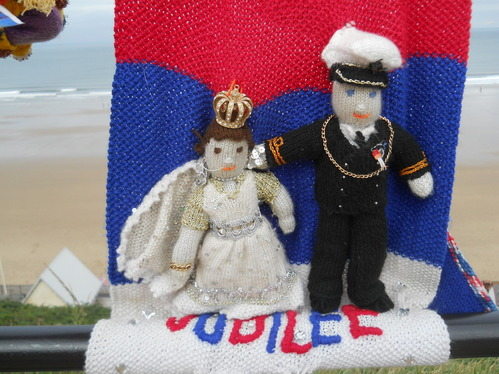
The Queen Elizabeth II's Diamond Jubilee 2012 was celebrated in Saltburn by the Sea, North Yorkshire, by the arrival of some charming knitted characters.
When I visited in September I was delighted to see the figures and have uploaded some photos.
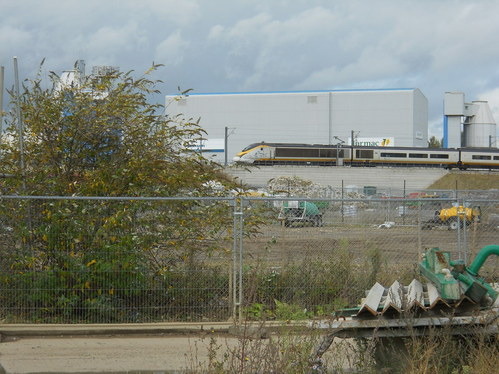
The transformation of the 67 acres of former railway land adjacent to King’s Cross and St Pancras International Stations is considered to be Europe's largest current urban regeneration project. The project involves the creation of housing, office, retail units and public spaces.
In October 2012 I was lucky to obtain a place on one of the development site tours and our small group donned hard hats and safety goggles before undergoing a tour of the building site.
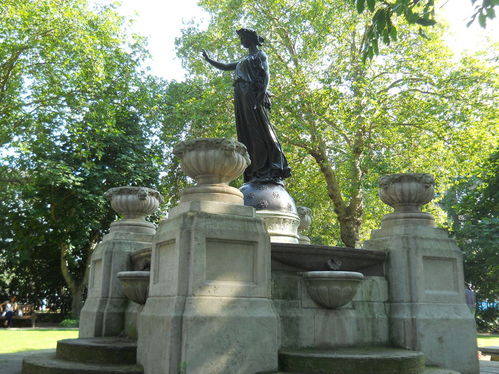
Today Smithfield is a distinctive part of the City of London, tucked away behind St Paul's Cathedral, it has managed to retain its village atmosphere. This part of the City has no major financial institutions, instead at its centre there is an attractive small, circular park which is surrounded by Smithfield Meat Market, St Bartholomew’s Hospital (known as Barts) and a couple of delightful churches.
In medieval times there were over one hundred parish churches in the City. Today there is only about a third of that number. However with a bit of detective work it is surprising to discover what remains.
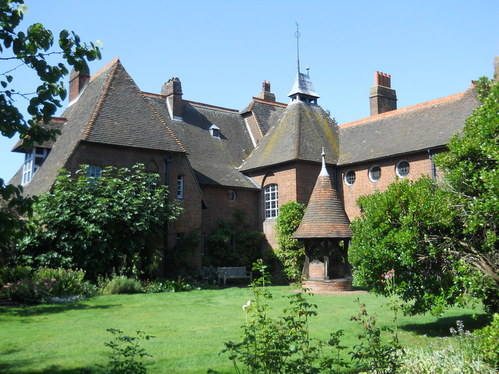
Last week I spent a delightful sunny afternoon visiting Red House, the former home of William Morris, in Bexleyheath, South London. It is so called because of the colour of its bricks and is considered to be one of the first Arts and Craft style buildings.
William Morris (1834 – 1896) was one of those Victorian gentlemen who was an all rounder and talented in many fields. He was an artist, textile designer, author, business man and socialist. Morris is famous for saying “Have nothing in your houses that you do not know to be useful or believe to be beautiful” and he invited his friends to decorate his home. Today the House is managed by the National Trust and inside little of the original furnishings remain.