Exploring the RAF Museum London
Posted on

Blériot XI in the Milestones of Flight Gallery - named after Louis Blériot, the first person to cross the English Channel in an aeroplane
Although I have often travelled past it I had to admit that until recently I had never visited the RAF Museum in Hendon. The first thing that hit me when I arrived was the sheer scale of the place, it is massive housing over 100 aircraft housed within five galleries. The display is impressive and varied, there really is something for everyone and you don't need to be an enthusiast to spend a few enjoyable hours there.
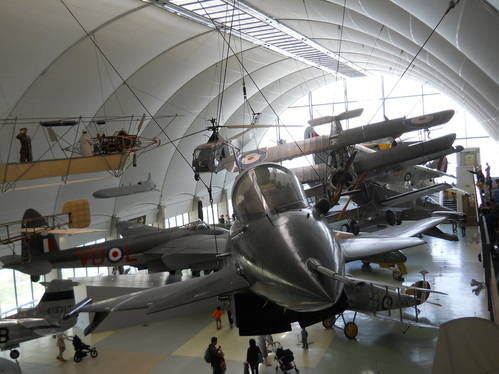
Eurofighter Typhoon in the Milestones of Flight Gallery - which can fly at more than twice the speed of sound
A good place to start is in the Milestones of Flight Gallery, which tells the history of aviation and displays many historic aircraft from the early pioneer days to the modern age.
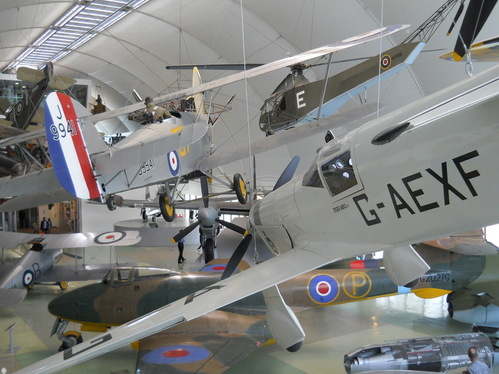
Milestones of Flight Gallery
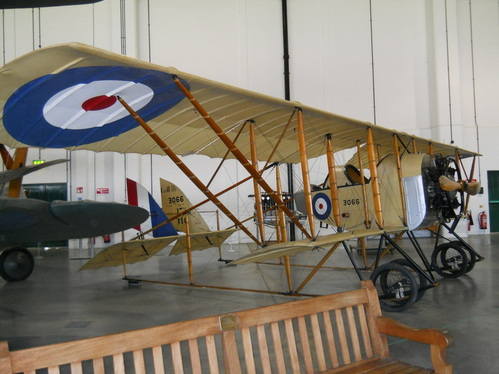
Caudron G3 in the Grahame-White Factory
The museum is housed on the former site of Hendon Aerodrome, which became internationally renowned as a pioneering centre of aircraft development in the early 1900s. The site later became an operational RAF station. One of my favourite things about the museum was that they have adapted some of the original building to house part of their collection. For example the Grahame - White building was originally the UK’s first purpose built aircraft factory. The building houses some beautifully designed early aircraft.
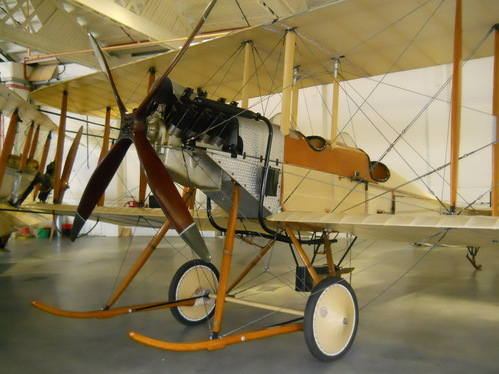
Sopwith Tabloid in the Grahame-White Factory
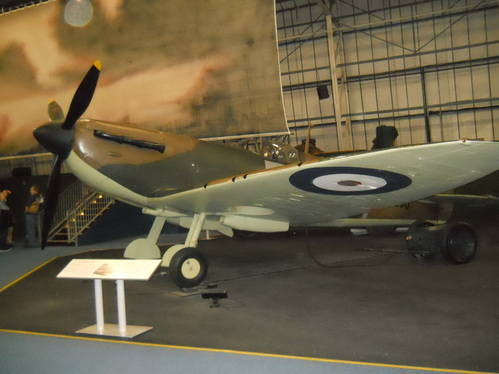
Spitfire in the Battle of Britain Hall - the most famous British aircraft used in World War II
The Battle of Britain gallery recalls the story of the world's first decisive air battle which took place during World War II between the Luftwaffe (the German Air Force) and British Royal Air Force in 1940. A good introduction to this gallery is the museum’s sound and light show "Our Finest Hour" which explains the Battle.
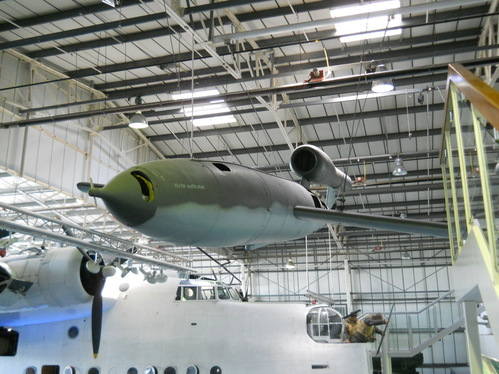
V1 (top) and Sunderland Seaplane (bottom) in the Battle of Britain Hall
The V1 the unmanned, high explosive flying bombs were used during the London Blitz (1940 – 1941).
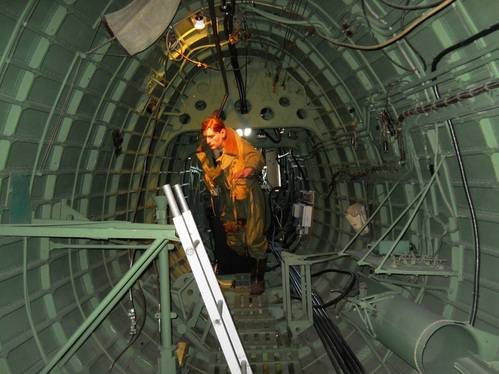
Sunderland Seaplane in the Battle of Britain Hall
The Sunderland Seaplane, a flying boat, has a walk through display which enables one to imagine the cramp conditions on board.
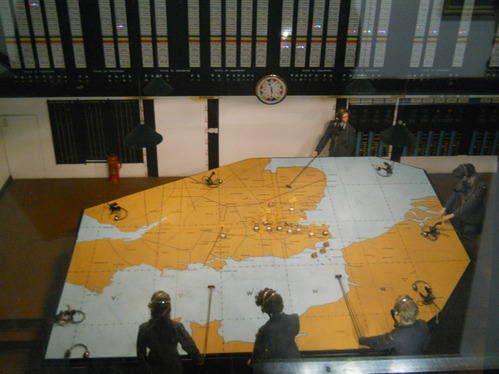
Operations Room in the Battle of Britain Hall
As well as aircraft there is a reconstruction of the Operations Room, film footage and an art exhibition.
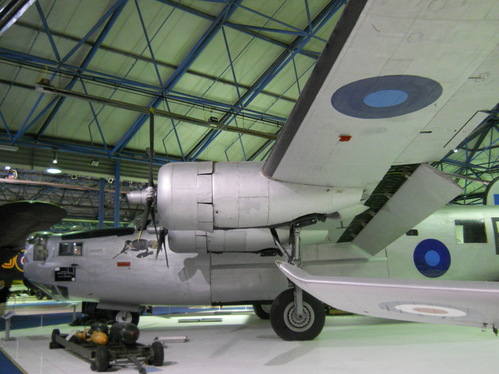
Avro Lancaster I in the Bomber Hall - the major heavy bomber used by Bomber Command in the final years of World War II
The Bomber Hall exhibition follows the development of the bomber planes from World War I to the present day. It’s only when you get up close one can really appreciate the enormous size of these planes.
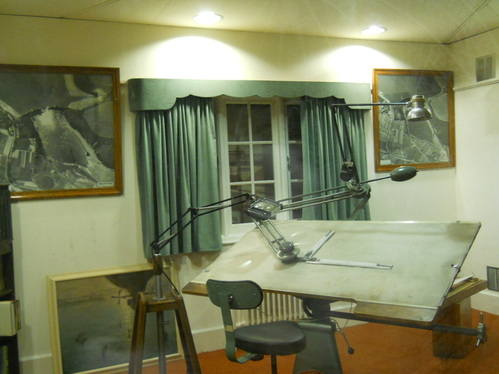
Reconstruction of Barnes Wallis Office in the Bomber Hall
Barnes Wallis the inventor of the Bouncing Bomb used during World War II, whose story is depicted in the film "The Dam Busters".
Practical Information
Address: Royal Air Force Museum London, Grahame Park Way, London, NW9 5LL
Nearest Tube Station/ Train Station: Colindale Tube Station is in Travelcard Zone 4. The RAF Museum is 12 minute walk from the station or take bus number 303 from the station. Alternative is Mill Hill Broadway Train Station is in Travelcard Zone 4. The RAF Museum is a 25 minute walk or take bus number 303 from the station.
Opening Hours: Open daily from 10am to 6pm. Please check website for up to date details before travelling.
Prices: Free admission
The RAF Museum hold regular events, many of which are free.
Wessex Cafe is located in the Historic Hangers and the Wings Restaurant is in the Battle of Britain Hall.
Website: http://www.rafmuseum.org.uk/london/
If you enjoyed this blog you might like reading my follow up visit to the RAF Museum's fascinating Grahame-White Watch Office.
The author of this blog is a qualified City of London and City of Westminster Tour Guide who leads guided walks combining world famous landmarks with hidden treasures often missed by the crowds.
Add a comment: