Behind the Scenes Tour of Alexandra Palace
Posted on
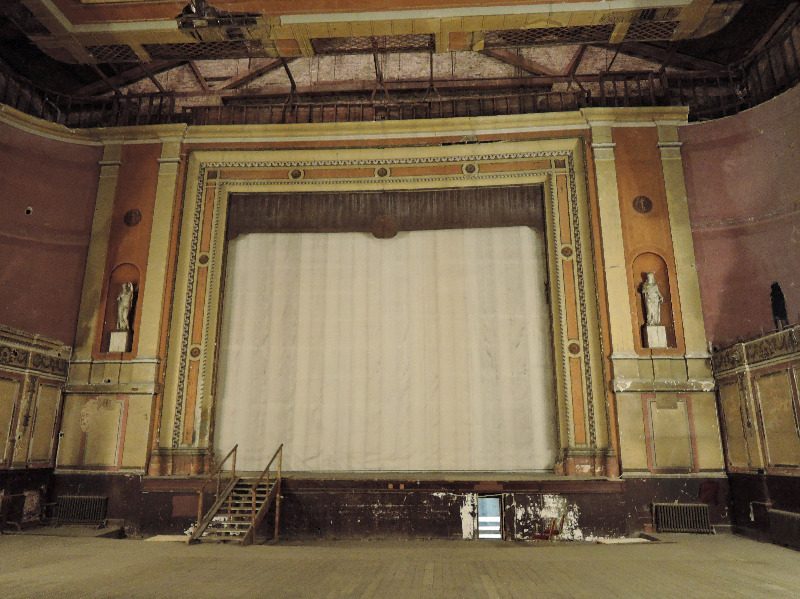
The Theatre
Recently I was lucky enough to attend one of the rare behind the scenes history tours of Alexandra Palace. Named after Alexandra, Edward VII's wife, and affectionally known as Ally Pally. The original building sadly burnt down just sixteen days after it opened.
The present building opened in 1875, less than two years after the original building was destroyed. The Palace caught fire once again in 1980 and on this occassion almost half of the building was damaged. Ally Pally was re-opened to the public in the late 1980s, however some parts including its Victorian theatre remain closed to the public apart from during guided tours.
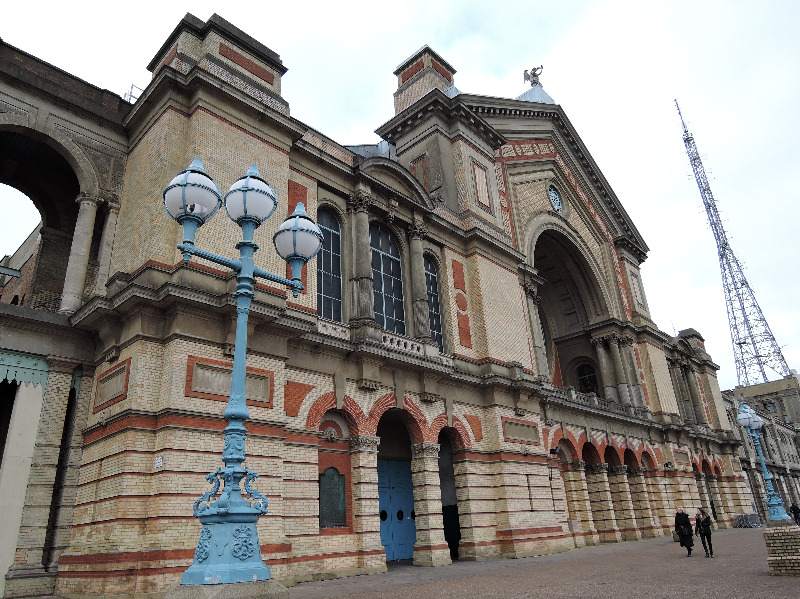
South side of Ally Pally
Today the Palace is an exhibition and conference venue hosts a variety of music, sporting and community events and there is also an ice rink.
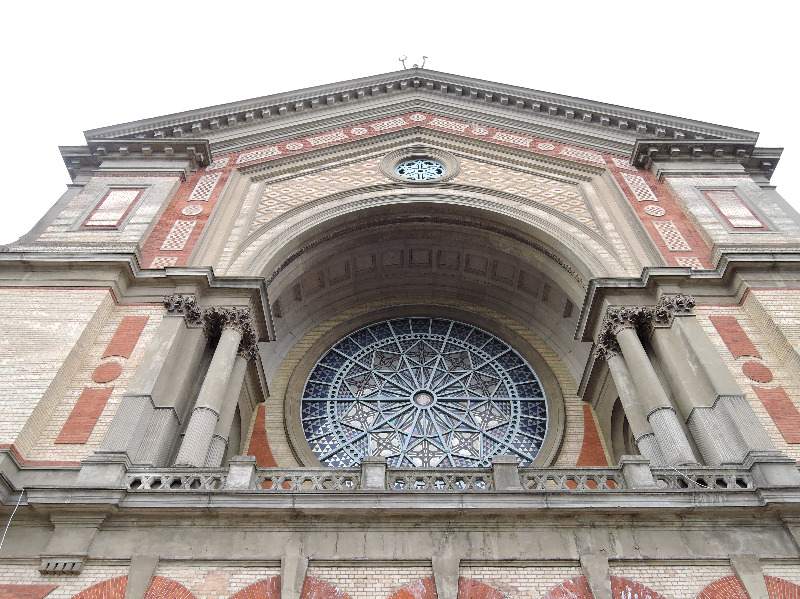
Rose window - South side of Ally Pally
Work is due to start in 2016 to restore the eastern end of the Palace which includes the Victorian theatre and former BBC studios.
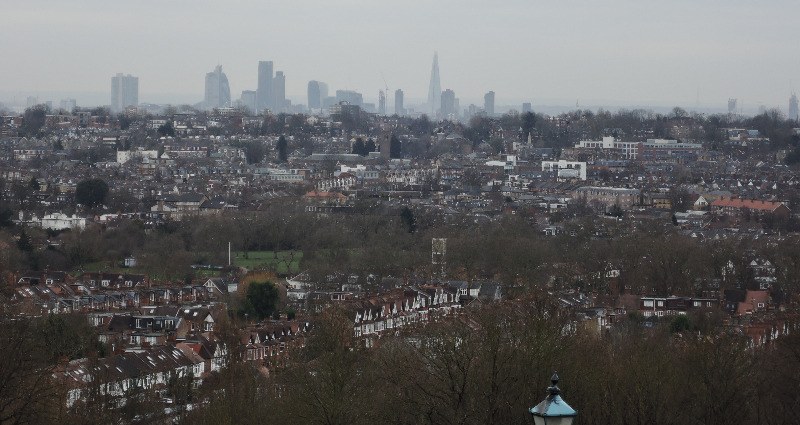
Views from the terrace towards the City of London
Ally Pally, a much loved North London landmark, sits on a hill top position in parkland covering 196 acres. From the Palace terrace their are breath taking views towards the City of London. Even on the dull day when I visited the views were still spectacular.
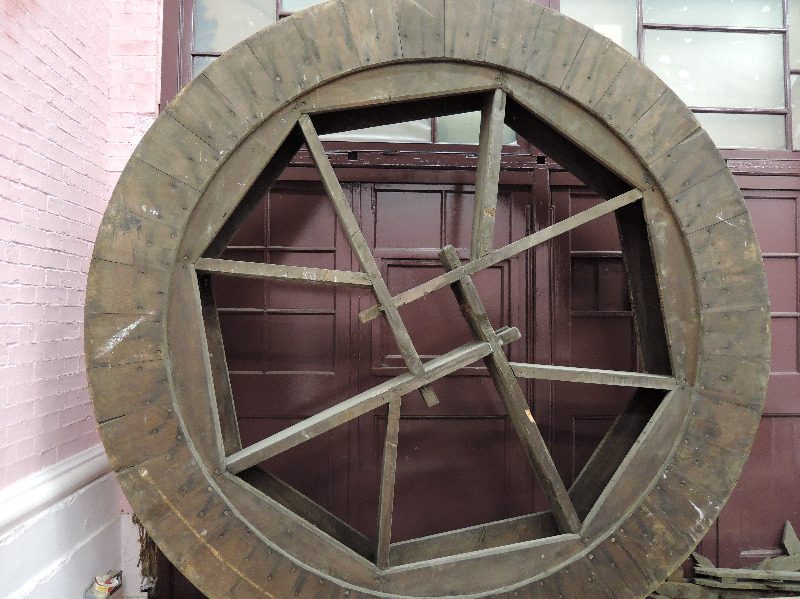
The foyer
The guided tour started with a visit to the Victorian theatre. In the foyer is a large wooden wheel which came from the Savoy Theatre and was used in the orginal Gilbert and Sullivan operas to change the scenery on the stage.
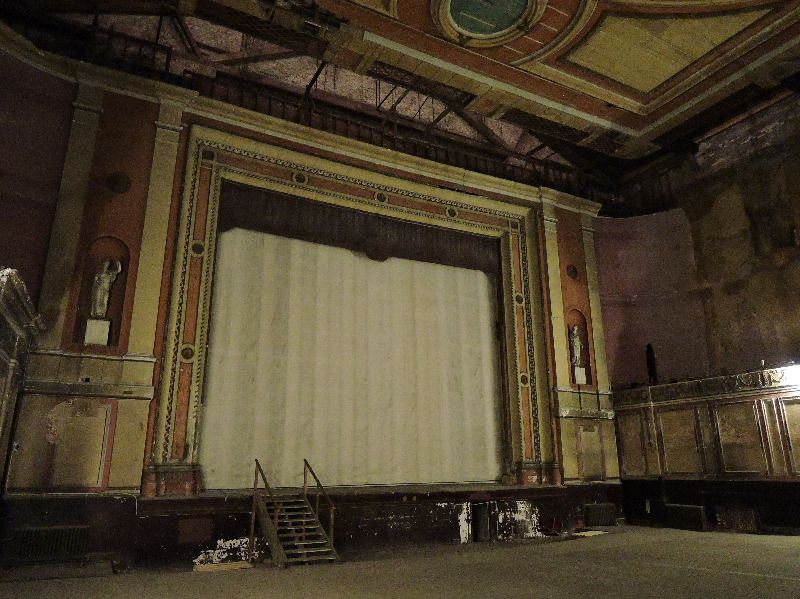
The Theatre
The faded grandeur of the Victorian theatre was my favourite part of the tour. It was opened in 1875 and was designed to seat 2,500 people.
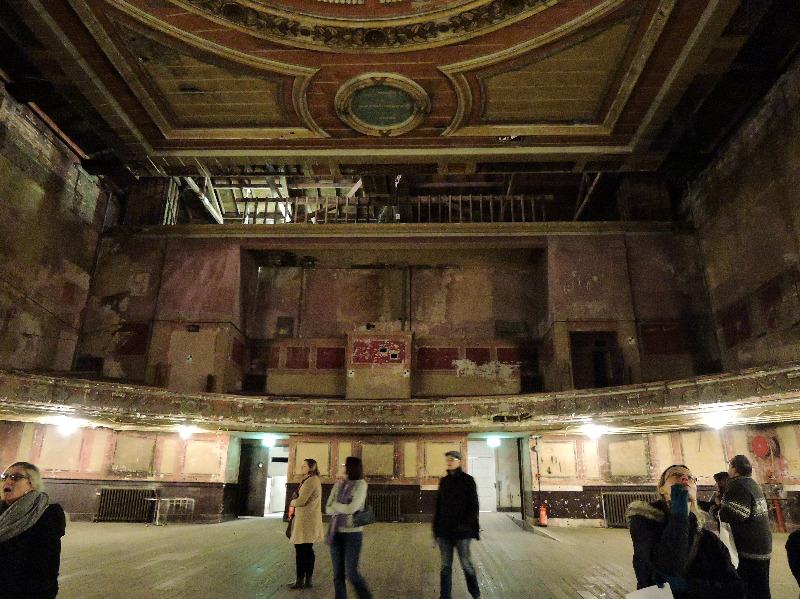
The Theatre - note the projection box in the centre of on the first floor balcony
The Theatre was used as a cinema from 1901 until 1914 and its projection box, one of the oldest examples of cinema equipment in London, is still in situ at the back of the theatre. At the time visitors were still permitted to smoke, although there were concerns about the potential fire risks due to the use of highly flamable nitrate film stock.
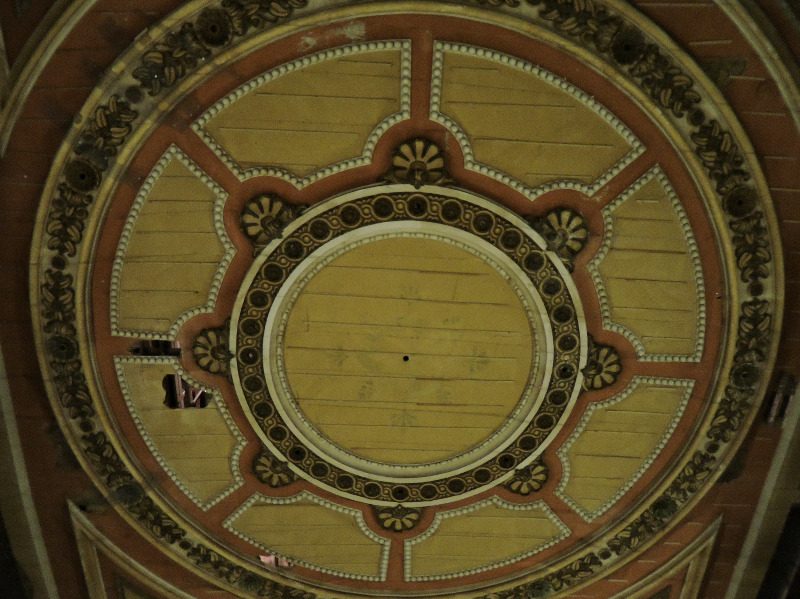
The Theatre
The Theatre is hauntingly beautiful, even though it has been closed to the public for many years and is in a state of decay it still has a wow factor when you walk in.
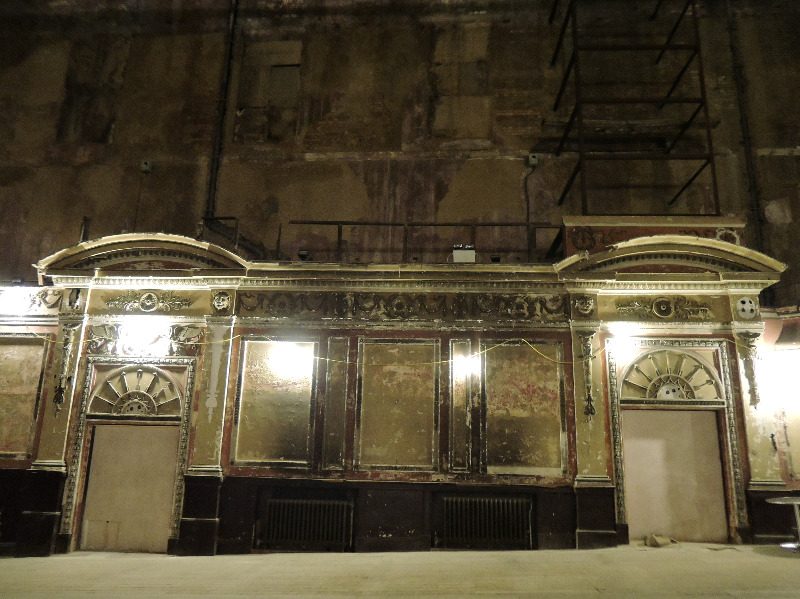
The Theatre
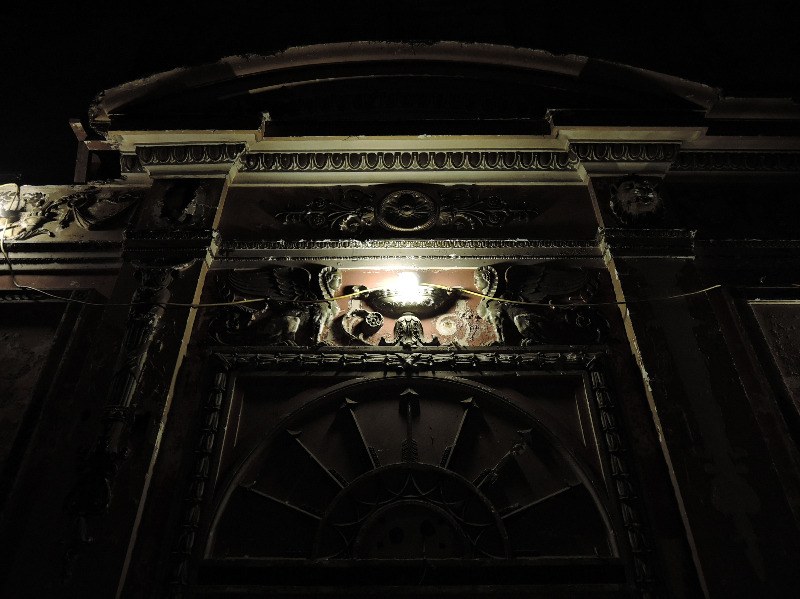
The Theatre
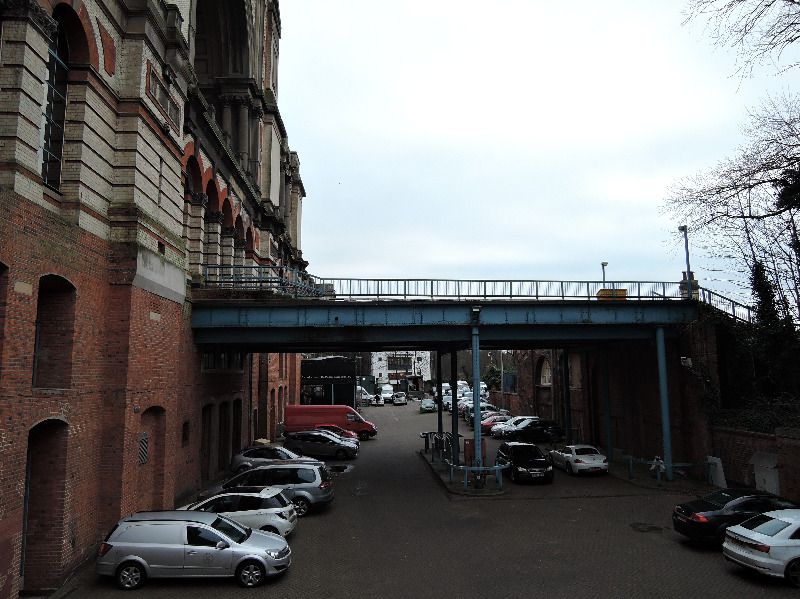
North side of Ally Pally
The building, on the right by the bridge, was the original Alexandra Palace train station. Opening as part of a short branch line in 1873, it brough visitors up the hill and directly to Ally Pally. The station closed in 1954 and the present day Alexandra Palace mainline station is located elswhere and forms part of a different railway route.
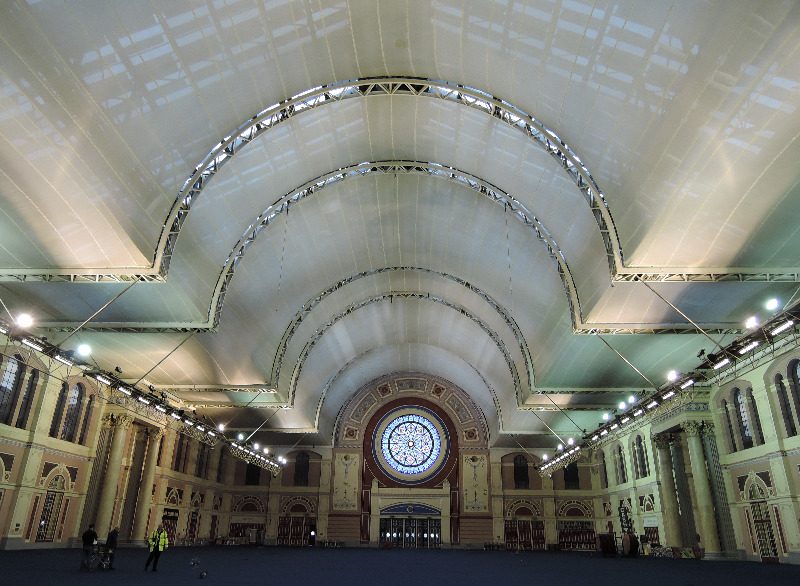
Great Hall
The Great Hall is the focal point of the current building and can accomodated 12,000 people. During World War I the Palace was used as a receiption centre for Belgian refugees and later German and Austrian POWs who slept in the Great Hall.
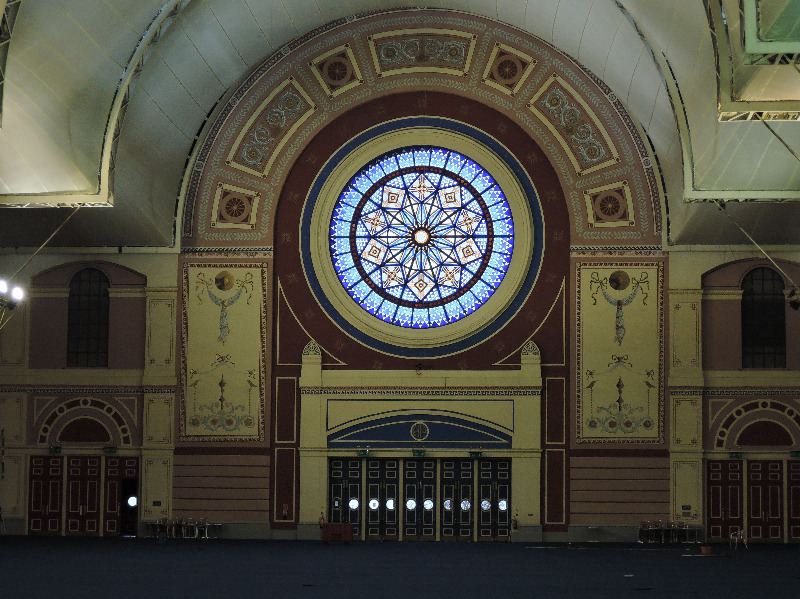
Rose Window - Great Hall
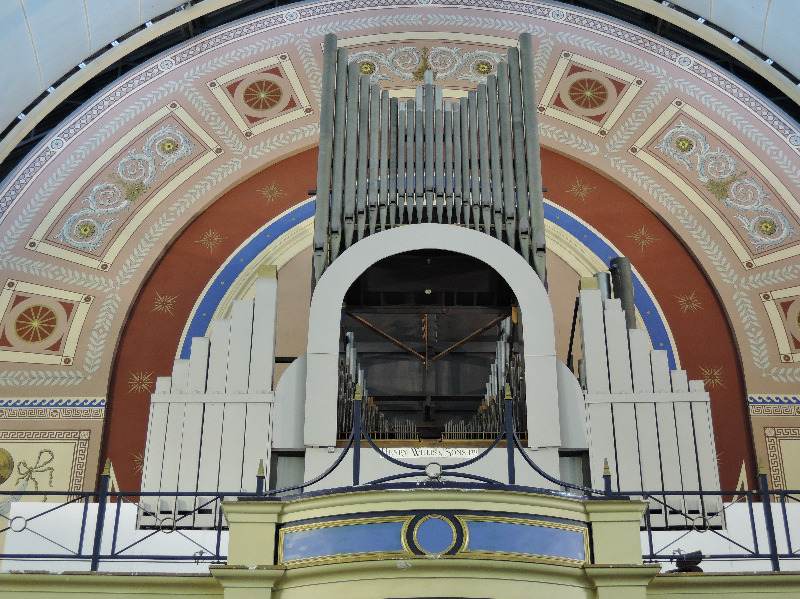
Willis Organ - Great Hall
The organ was designed by Father Henry Willis and replaced the original organ which was destroyed in the Palace's first fire. It was originally powered by two steam engines. The organ was vandalised during World War I and when it was restored it was also converted from steam to electric power. In World War II the organ was damaged in a bomb blast and was restored to its original condition in the 1980s.
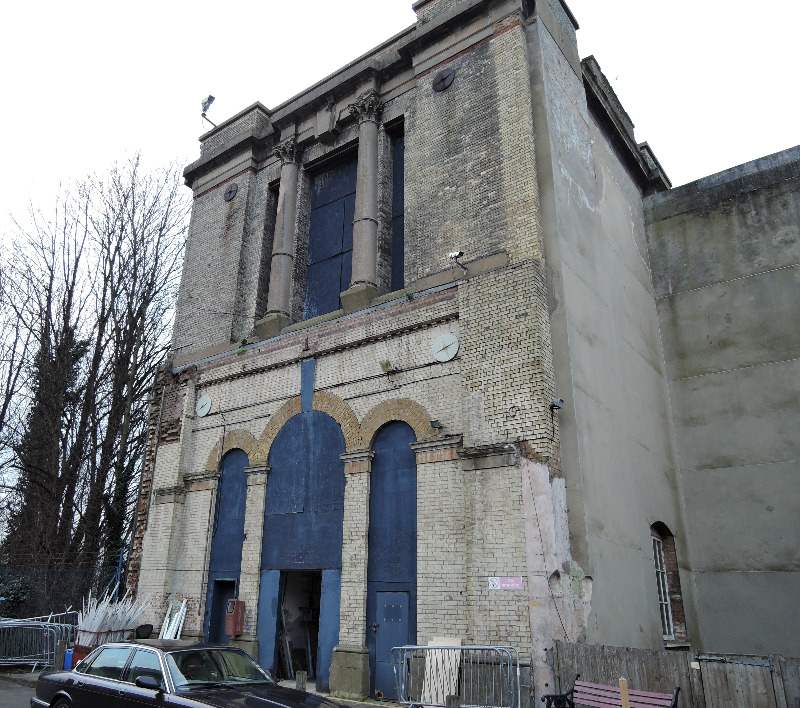
Former water tower
After the first Palace was destroyed by fire the current building included water towers and its own fire brigade station.
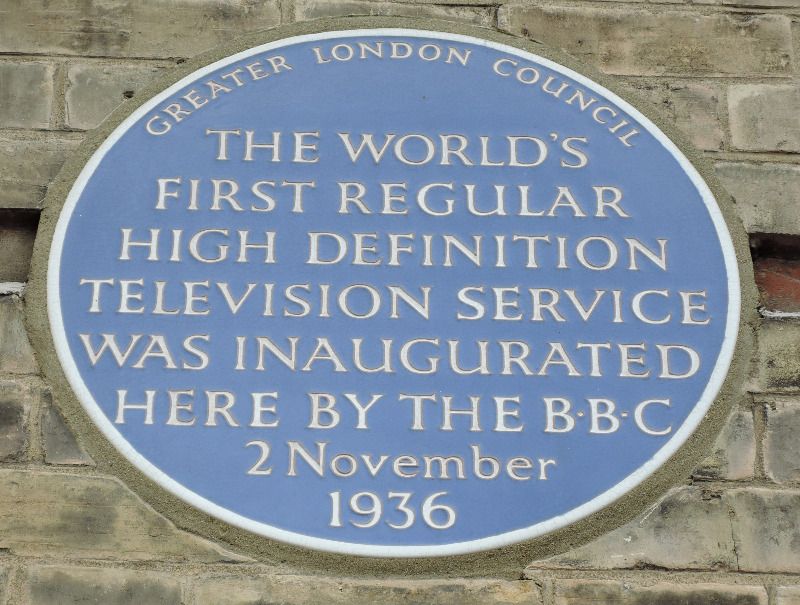
Blue Plaque
On 2nd November 1936 the BBC transmitted the world's first regular high definition public television service from Alexandra Palace. During World War II broadcasting stopped but the transmitters were used to jam radio signals used by the Germans.
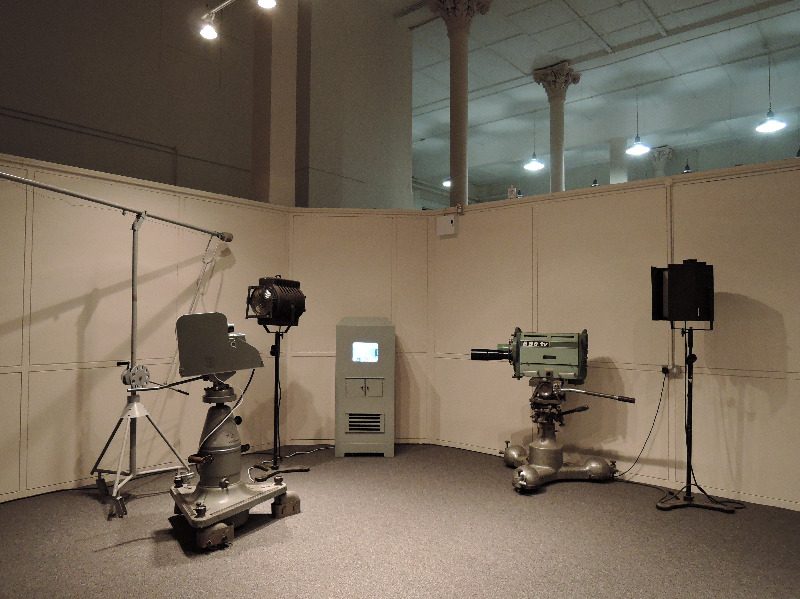
BBC Studios
Television services resumed after the war until 1981, initially with the BBC and then with the Open University. At the end of the tour we were able to visit a small exhibition about the studios.
I'd certainly recommed the history tours, they are extremely popular and as they are not frequently held they tend to get booked up quickly.
Practical Information
The history tours of the Palace are held occassionally and sell out fast. If you are interested in attending join their mailing list to receive notification of when future tours are taking place.
As well as the tours there are lots of other things to do at Alexandra Palace.
Address: Alexandra Palace Way, London, N22 7AY
Nearest tube: Wood Green. The station is in Travelcard Zone 3. W3 bus which goes to Alexandra Palace stops at Wood Green Station.
Nearest Train Station: Alexandra Palace. The station is in Travelcard Zone 3. W3 bus which goes to Alexandra Palace stops at Alexandra Palace Station.
Bus: W3. The bus route is from Finsbury Park to Northumberland Park. The bus stops at the top of the hill by Alexandra Palace Ice Rink or the Palm Court entrance.
More detailed information about how to get to Alexandra Palace can be found here.
Bar and Kitchen open daily from 11am to 11pm.
Website: http://www.alexandrapalace.com/
If you enjoyed this blog post you might like to read about another amazing place to visit Strawberry Hill.
The author of this blog is a qualified City of London and City of Westminster Tour Guide who leads guided walks combining world famous landmarks with hidden treasures often missed by the crowds