Spotlight on... Bram Stoker & Dracula
Posted on
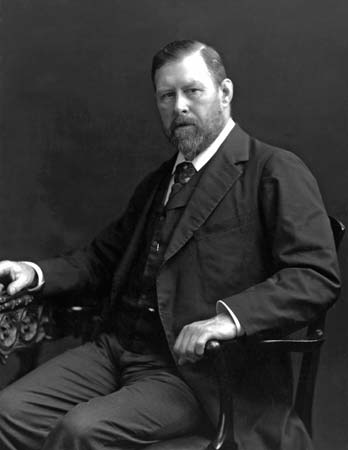
Abraham "Bram" Stoker (1847 – 1912)
Today Bram Stoker is best known as the author of Dracula. However he spent most of his life working in the theatre. His first job was an unpaid position as theatre critic for the Dublin Evening Mail, which enabled him to attend opening night performances and interview the cast.
One evening in December 1876 Henry Irving invited Stoker, who had written a review of him in Hamlet, to dine with him in his suite at the Shelbourne Hotel, Dublin. Irving complemented Stoker on his review and it was the start of a lifelong relationship which would involve Bram becoming his friend and business manager.
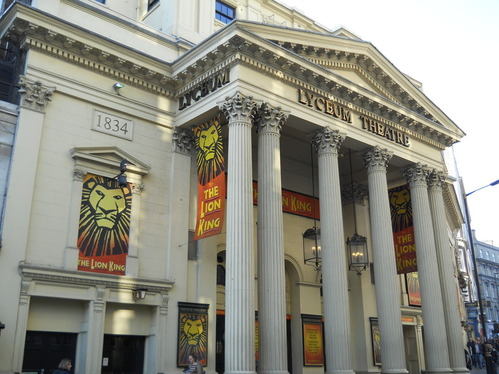
The photo is of the current Lyceum Theatre dating from 1904, which is on the same site as the earlier theatre, in Wellington Street, where Bram worked. The current theatre has retained the original portico (porch) from the earlier theatre.
When Irving took a lease on the Lyceum Theatre in Covent Garden he offered Stoker the position of business manager. Stoker worked with Irving from1878 until Irving's death in 1905. His job involved supervising the front of house to running personal errands. Irving was the most famous actor at that time and Stoker idolised him.
Dracula which was first published in 1897 and prior to its publication the first reading of Dracula took place at the Lyceum Theatre and ensured that Stoker's dramatic rights were protected.
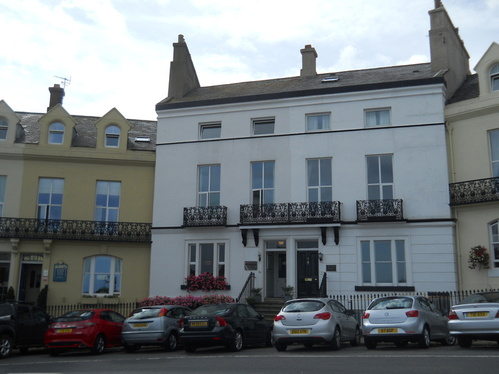
No 6 East Crescent in Whitby is the white coloured house on the right and is where Stoker and his family stayed.
The charming seaside town of Whitby*** in North Yorkshire features in three of Dracula chapters (6 – 8). In 1890 Stoker had spent three weeks in Whitby with his wife Florence and their son Noel. This visit inspired him to write some of the most evocative scenes of the novel. The town of Whitby has little changed from Victorian times when Stoker visited and its not difficult today to identify the locations in the novel.
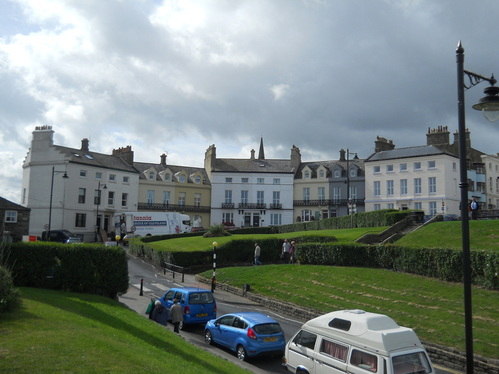
The photo is of East Crescent, previously known as Royal Crescent, where Stoker stayed.
Stoker and his family stayed at No 6 Royal Crescent (now East Crescent). It was at the Royal Crescent that Mina and her friend Lucy spend their summer holidays and No 7 is where the lawyer working from Count Dracula lives.
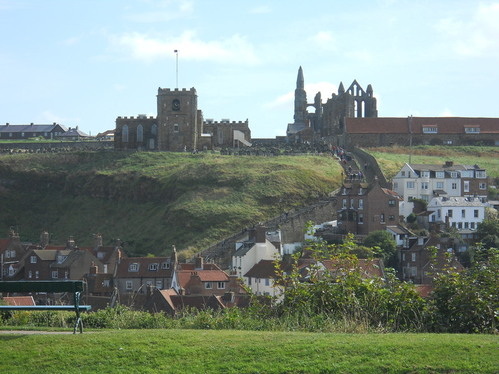
The Victorian style Stoker Memorial Bench is located to provide visitors with the same views across the harbour to East Cliff that Stoker enjoyed. It is from here that Mina looks over and sees Lucy, her sleep walking friend, in St Mary’s churchyard with something dark bending over her. Mina then ran up the 199 Steps to rescue Lucy.
Stoker died in 1912 and his remains are at the Golders Green Crematorium, North London. At the time of this death he was best remembered for his work with Irving as it was only from the1930s when the Dracula story was made into feature films that it became the celebrated classic it is considered today.
***Whitby is a pretty sea town with quaint old fishermen’s cottages, Georgian town houses, cobbled streets and charming little alleyways. On the East side is the Old Town with the Captain Cook Memorial Museum and the famous 199 Steps leading to the dramatic ruins of the Abbey. On the West side is the Dracula Experience and there are fantastic views from the whalebone arch looking down onto the working fishing harbour. Not forgetting Elizabeth the steam bus and the delightful Pannett Park with its art gallery and museum. With a great choice of pubs, restaurants (the famous Magpie Cafe and Humble Pie), tea rooms (Botham‘s) and craft shops (look out for Whitby Jet jewellery) this is one of my favourite places to visit. More information about Whitby can be found here.
To hear more about Bram Stoker's Dracula and other grusome tales book on Covent Garden and its Sinister Secrets walk.
The author of this blog is a qualified City of London and City of Westminster Tour Guide who leads guided walks combining world famous landmarks with hidden treasures often missed by the crowds.
Add a comment: